
What’s New?
New Seller’s Stamp Duty (SSD) Rules -What You Need to Know in 2025
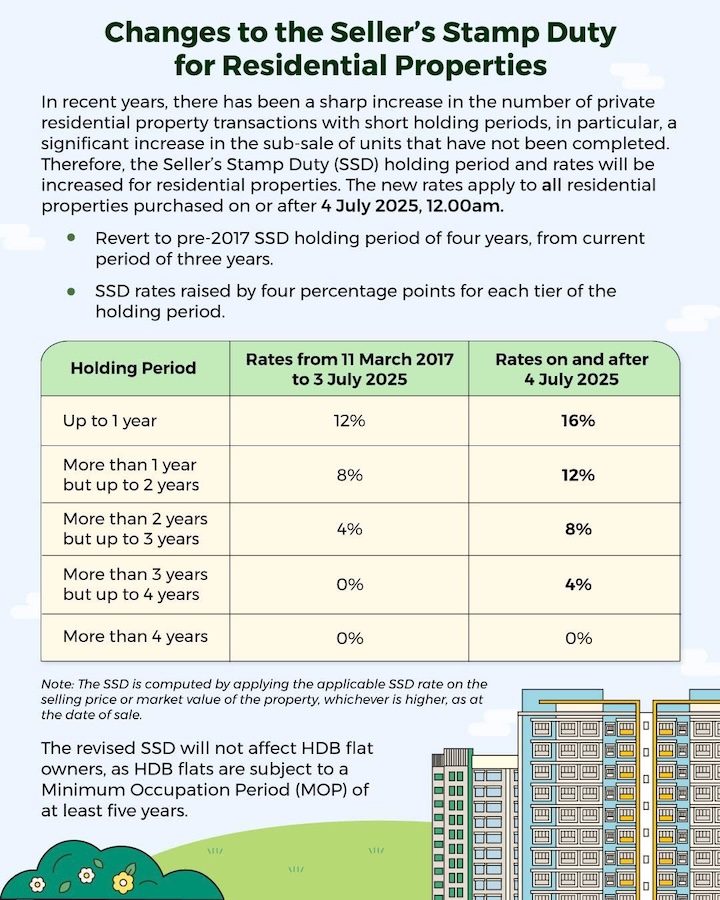
In an effort to maintain a stable and sustainable property market, Singapore has revised its Seller’s Stamp Duty (SSD) regulations for residential properties, effective 4 July 2025. Whether you’re a homeowner, investor, or just beginning your property journey, it’s important to understand what these changes mean for you.
What Changed?
Previously, sellers were subject to SSD if they sold their private residential property within 3 years of purchase. Under the new rules, the holding period has been extended to 4 years, with higher SSD rates applied to sales made within this timeframe.
Why This Change?
According to government data, sub-sale activities (when properties are sold before completion) have been rising, signalling an uptick in short-term speculative behavior:
-
Sub-sales rose from 0.9% in 2020 to 6.8% in 2023.
-
Though it eased to 4.4–4.5% in early 2025, the trend triggered concern.
By extending the SSD period and raising rates, authorities aim to discourage short-term flipping, reduce market volatility, and ensure that properties are purchased for genuine long-term use or investment.
Who Will Be Affected?
This move primarily targets speculators and short-term investors. For the majority of homeowners and long-term property investors, the changes are unlikely to have significant impact, as most typically hold their properties for more than four years.
That said, buyers and sellers should factor SSD into their timeline and financial planning, especially if they are considering resale before the 4-year mark.
What It Means for the Market?
-
More stable pricing: Less speculative activity could help moderate price fluctuations.
-
Stronger rental demand: Some sellers may choose to rent out their properties until the SSD period lapses.
-
Thoughtful investment planning: Investors must be more strategic, focusing on long-term capital appreciation and rental yield rather than quick gains.
^ Home ^
How Can We Help You?